Netflix Rules Korea’s Market — But Uber Is Knocking on the Door
🧠 Netflix dominates Korea’s streaming market with massive local engagement.
😱 Uber partners with Naver to challenge KakaoT’s near-monopoly in ride-hailing.
❓ Can Korean tech firms survive the next wave of global platform competition?
📑 Contents
- 🎬 Netflix and the Korean Streaming Power Shift
- 📊 How Foreign Platforms Took Over the Local Market
- 🚖 KakaoT’s Monopoly and Uber’s Strategic Entry
- 💡 Inside the Uber–Naver Partnership
- 🌍 The Numbers: Where Uber Really Stands
- 🛡️ How Korean Platforms Can Fight Back
- 🔮 Final Thoughts: Another Netflix-Like Takeover?
🎬 Netflix and the Korean Streaming Power Shift
When Netflix entered Korea in 2016, it was dismissed as a passing fad. Less than a decade later, it owns the market. According to WiseApp’s August 2025 data, Netflix logged 14.57 million monthly active users (MAU)— nearly double that of Coupang Play (7.73 million) and far ahead of local rivals like Tving (5.89 million) and Wavve (2.39 million). Even combined, those two reach only 8.28 million users.
• Netflix’s investment in K-content and local production built unmatched loyalty.
• Titles like Squid Game and Crash Landing on You changed global perception.
• Domestic OTTs are still stuck in merger-based scaling, not innovation.
Netflix played it smart: betting big on Korean storytelling while exporting it globally. Hits like A Hard Day’s Lie and Trauma Center surpassed 35 million views worldwide, proving local content could go international—if funded and distributed right.
📊 How Foreign Platforms Took Over the Local Market
It’s not just streaming. Foreign platforms dominate nearly every corner of Korea’s digital ecosystem — search, browsers, and even social media.
| Sector | Local Leader | Foreign Challenger | MAU (Aug 2025) |
|---|---|---|---|
| Search | Naver | Naver: 45.2M / Google: 42.4M | |
| Browser | Samsung Internet | Chrome | Chrome: 40.1M |
| Social Media | KakaoTalk | Instagram / TikTok | TikTok: 10M+ |
• Google’s MAU gap with Naver is narrowing fast.
• TikTok’s engagement among young Koreans surpasses domestic platforms.
• Foreign tech firms control OS, ads, and discovery — the digital gateways.
Why are local players losing ground? Three reasons: • Global-scale capital and infrastructure. • Superior personalization tech. • Proven subscription economics. That mix is tough to beat.
🚖 KakaoT’s Monopoly and Uber’s Strategic Entry
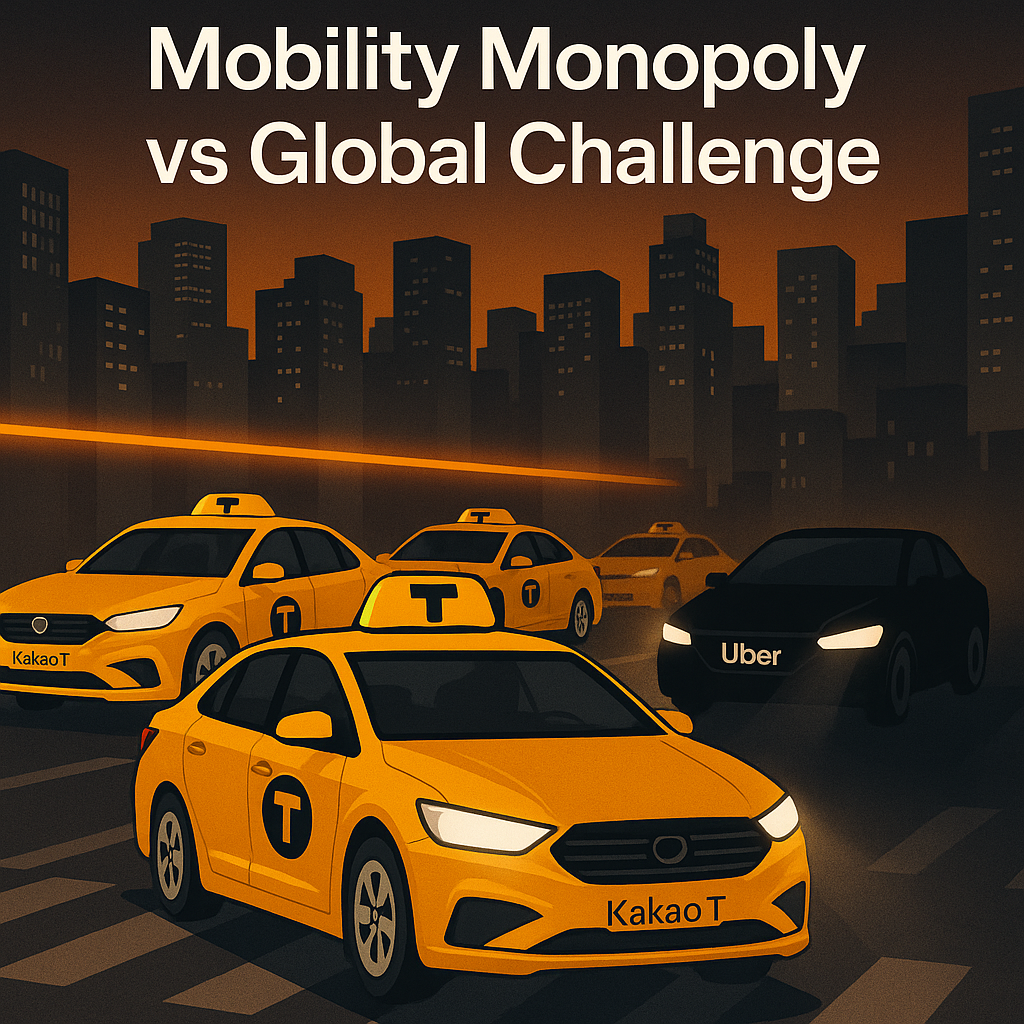
In mobility, KakaoT reigns supreme. It commands over 90% of Korea’s ride-hailing market. As of 2024, its MAU stood at 13.3 million. Uber, meanwhile, has around 590,000 users — barely a blip on the radar.
| Platform | MAU | Market Share | Main Strategy |
|---|---|---|---|
| KakaoT | 13.28M | ~94% | All-in-one mobility ecosystem |
| Uber | 0.59M | 5–7% | Naver partnership, family account, loyalty credits |
| Tada | 0.07M | ~1% | Premium niche service |
• KakaoT is a one-stop mobility giant with strong brand lock-in.
• Uber focuses on Naver Plus users with free trials and cashback deals.
• The real battle starts once user habits begin to shift.
Uber isn’t trying to win overnight. It’s targeting long-term loyalty through partnership economics — 12-month Uber One memberships, up to ₩10,000 in ride credits, and family-account features that appeal to Korean users who value convenience.
💡 Inside the Uber–Naver Partnership
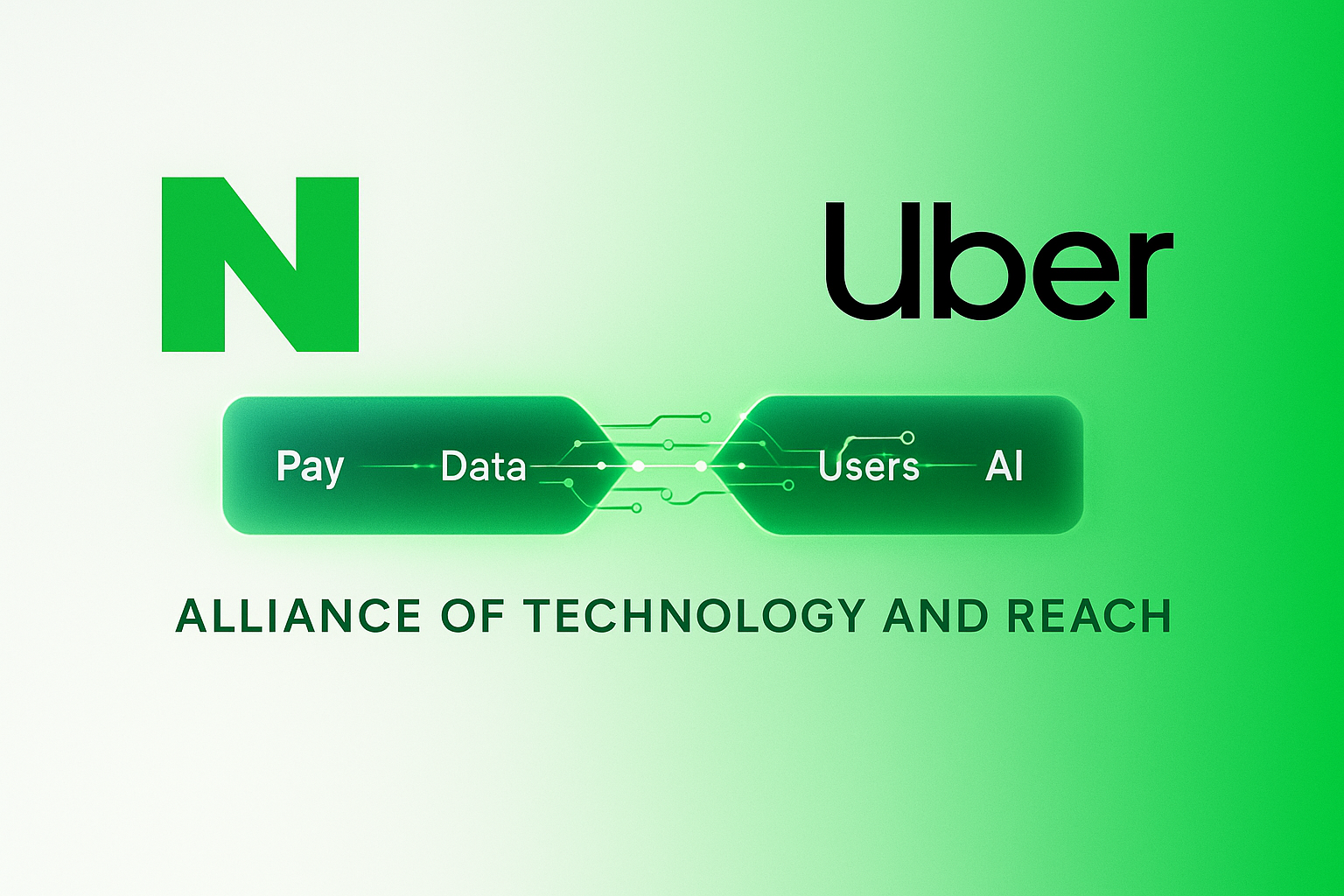
This isn’t a simple promo deal. It’s a calculated alliance between Korea’s biggest tech platform and a global mobility powerhouse. Naver already helped Netflix launch ad-tier subscriptions in 2024 — leading to a 55% jump in new subscribers. Uber clearly studied that playbook.
| Area | Naver’s Role | Uber’s Role | Synergy |
|---|---|---|---|
| User Acquisition | 12M Naver Plus members | Offer free Uber One trials | Fast user onboarding |
| Payments | Integrate Naver Pay | Enable auto-pay features | Frictionless ride experience |
| Data & AI | Behavioral analytics | Mobility data sharing | Ad targeting and personalization |
• The Uber–Naver model combines domestic reach and global tech.
• Payment + Data + Subscription synergy could reshape user retention.
• It’s a blueprint for future foreign–local platform alliances in Asia.
🌍 The Numbers: Where Uber Really Stands
So where is Uber now — really? Here’s the snapshot:
| Metric | KakaoT | Uber | Note |
|---|---|---|---|
| MAU | 13.3M | 0.59M | 22x gap |
| Market Share | 90–94% | 5–7% | Early-stage growth |
| Annual Growth | Flat | +50% | Post-rebrand surge |
| Profitability | N/A | -₩10.5B loss | 2024 estimate |
• Uber’s base is small but growing fast.
• A 10% market share by 2026 is plausible if Naver synergy continues.
• Sustained user incentives will test its path to profitability.
Uber isn’t dethroning Kakao anytime soon. But it’s creating something Korea hasn’t had for years — a credible second player.
🛡️ How Korean Platforms Can Fight Back
Korean tech firms can’t rely on mergers or regulatory shields anymore. They need innovation where it matters:
• Enhance user experience, not just app features.
• Invest in faster, data-driven UX design.
• Diversify revenue through tiered memberships.
• Compete with agility, not protectionism.
• Collaborate globally, rather than isolating domestically.
In short: compete through service quality, not sheer size.
🔮 Final Thoughts: Another Netflix-Like Takeover?
Netflix’s winning formula — content + tech + subscription — redefined entertainment. Uber is attempting the same in mobility: transport + data + subscription. But Korea’s market is tougher, with deeper regulation and entrenched local habits.
So no, Uber won’t “own” the market the way Netflix did. But it will reshape it. Competition will grow, benefits will spread, and innovation will speed up.
In that sense, Uber may not be Korea’s next Netflix — but it could be the reason the next Korean platform evolves faster.
❓ Quick FAQs
Q1. Can Uber really beat KakaoT?
A. Not soon. But a 10% share within two years is realistic with Naver’s support.
Q2. Will this partnership last?
A. If data sharing and user retention metrics align, it could become long-term.
Q3. What’s Kakao’s next move?
A. Expect deeper membership perks and loyalty programs to counter Uber’s push.
Q4. Is Uber profitable in Korea?
A. No — but it’s focusing on growth first, not earnings.
Q5. Is this Netflix 2.0 all over again?
A. Maybe not in scale, but definitely in pattern — foreign tech rewriting the local rules.
Intrinsic Value Basics: How to Find a Stock’s Real Fair Price
Intrinsic Value Basics: How to Find a Stock’s Real Fair Price📌 3-Line Summary🧠 The intrinsic value of a stock depends on its real earning power and growth potential.😱 Don’t be fooled by short-term prices — understand key metrics like P/E, P/
happy0702.tistory.com
Google Gemini Launches “Nano Banana” — The AI Editing Revolution
Google Gemini Launches “Nano Banana” — The AI Editing Revolution📌 3 Key Takeaways🧠 Google unveils its new image and video editing AI feature “Nano Banana,” boosting Gemini’s capabilities.😱 It marks a shift from text-only AI models like
happy0702.tistory.com
The New Era of AI Dominance: OpenAI and AMD’s Strategic Alliance
The New Era of AI Dominance: OpenAI and AMD’s Strategic Alliance📌 3 Key Takeaways🤝 OpenAI and AMD have announced a large-scale partnership to build AI data centers powered by next-generation GPUs.⚙️ The deal challenges Nvidia’s dominance in t
happy0702.tistory.com
Rice Prices Break the Limit: Policy Missteps and Looming Risks
Rice Prices Break the Limit: Policy Missteps and Looming Risks📌 3-Line Summary🧠 Rice prices surpassed 60,000 KRW per 20kg, creating direct pressure on household costs😱 Government’s isolation policy backfired, accelerating the price surge❓ Will
happy0702.tistory.com
📢 Hashtags
#NetflixMarketShare #UberNaverPartnership #KakaoTRideHailing #GlobalPlatformBattle #DigitalEconomy #OTTTrends #UberGrowth #KoreanTechStrategy #NaverMembership #MobilityFuture #StreamingDominance #KContent #PlatformEconomy #DataDrivenMarket #BusinessInsight


