U.S. Loan Crisis Fear Escalates — Is Another SVB Collapse on the Horizon?
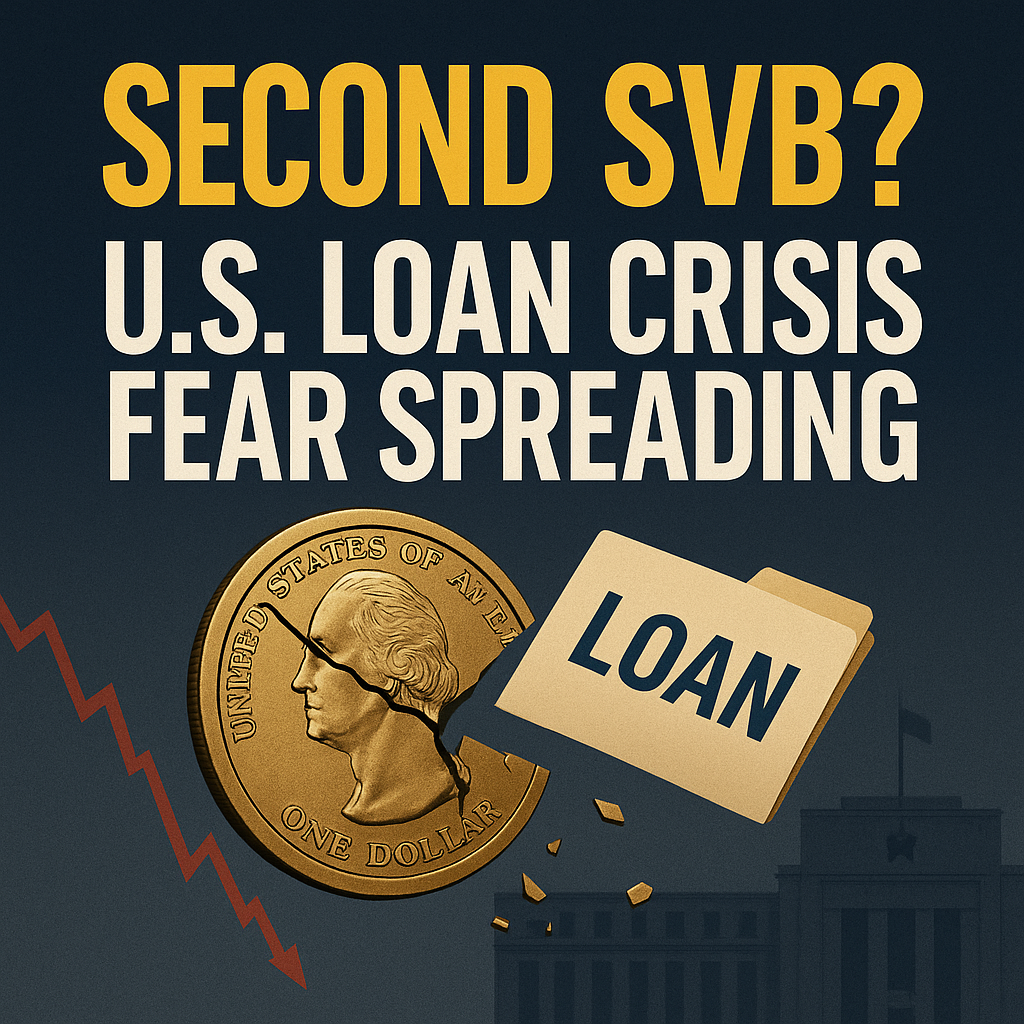
🧠 U.S. regional banks are rattled as bad loans emerge, shaking confidence across the market.
😱 Investors fear a repeat of the 2023 Silicon Valley Bank crisis amid rising credit risks.
❓ Analysts debate whether this is a one-off credit scare or a precursor to a broader systemic shock.
📑 Table of Contents
- 💥 The Growing Fear of Bad Loans in U.S. Banks
- 📊 Loan Loss Reports and Market Reactions
- 🧩 Parallels and Contrasts with the SVB Collapse
- 💡 Expert Analysis and Possible Scenarios
- 🌍 Spillover Effects on the Korean Financial Market
- ✅ Key Lessons and Outlook
💥 The Growing Fear of Bad Loans in U.S. Banks
U.S. regional banks are once again under stress. Zions Bancorp and Western Alliance have disclosed significant bad loans, triggering a sharp sell-off in bank stocks and reviving the term “credit risk” across Wall Street. JP Morgan CEO Jamie Dimon warned, “If you see one cockroach, there are likely more,” suggesting that these incidents might not be isolated cases. So the question arises: Is this the beginning of another SVB-like event, or just a limited credit warning?
📊 Loan Loss Reports and Market Reactions
Zions and Western Alliance each reported multi-million-dollar losses. Zions disclosed approximately $50 million in commercial and industrial loan defaults, while Western Alliance cited potential litigation risks tied to collateral fraud. Though these were isolated disclosures, the market reacted violently. Regional bank shares plunged 5–7% in a single day as investors rushed to de-risk their portfolios.
| Bank | Loss Amount (USD) | Primary Cause | Stock Reaction |
|---|---|---|---|
| Zions Bancorp | $50 million | Commercial loan defaults | -7% |
| Western Alliance | Undisclosed (est. tens of millions) | Fraud, legal exposure | -5% |
| First Brands | Bankruptcy-linked | Auto parts supply chain debt | Ripple effect across lenders |
The root of the issue lies in the prolonged period of high borrowing costs. Corporate cash flows are weakening, loan repayments are tightening, and delinquency rates are accelerating.
🧩 Parallels and Contrasts with the SVB Collapse
The 2023 Silicon Valley Bank (SVB) collapse was triggered by unrealized bond losses and a liquidity panic. This time, the issue revolves around credit quality deterioration — a different mechanism but a similar sentiment.
| Comparison | SVB Collapse (2023) | Bad Loan Crisis (2025) |
|---|---|---|
| Trigger | Bond valuation loss, bank run | Loan defaults, credit fraud |
| Affected Sector | Tech startups, VC firms | Regional banks, SMEs |
| Regulatory Response | FDIC emergency intervention | Monitoring, no intervention yet |
| Market Reaction | Panic-driven withdrawals | Cautious risk repricing |
The SVB crisis was about liquidity; this one is about credit. The fear isn’t deposits fleeing banks but loans that won’t get paid back.
💡 Expert Analysis and Possible Scenarios
Financial analysts largely see this as a “contained credit event,” but they warn that its aftershocks may linger. JP Morgan predicts tighter lending standards that could squeeze small and mid-sized enterprises (SMEs). Investopedia noted that “market fear is spreading faster than the actual financial losses.” The key variable is interest rates. If the Fed keeps rates elevated, funding costs will remain high and default risks will grow among weaker borrowers.
🌍 Spillover Effects on the Korean Financial Market
The U.S. bank sell-off has spilled into the Korean stock market. The KOSPI index fell over 1%, with banking and insurance sectors leading the decline. Foreign investors are trimming exposure, and the won-dollar exchange rate continues to edge upward. Still, Korea’s direct exposure remains limited. The Bank of Korea emphasized that domestic financial institutions are “sound and well-capitalized.” However, investor sentiment is fragile, and even minor global tremors are quickly amplified in Seoul’s market.
| Impact Area | Short-Term Effect | Long-Term Outlook |
|---|---|---|
| KOSPI | -1% decline | Likely rebound as volatility stabilizes |
| KRW/USD | Won depreciation | Dependent on Fed policy |
| Foreign Capital | Short-term outflows | Reentry once credit sentiment improves |
✅ Key Lessons and Outlook
The latest wave of bad-loan fears reveals how fragile financial confidence can be. One default can unsettle an entire market. Yet, unlike 2023, regulators now have stronger safeguards and faster response systems in place. In the end, it all comes down to trust. Money moves not only through numbers but through sentiment. When confidence holds, stability returns — even in the face of fear.
❓ FAQ
Q. Could this turn into another SVB-scale collapse?
A. Unlikely at this stage, but risks could grow if interest rates stay high.
Q. Which banks are most exposed?
A. Those with heavy exposure to commercial real estate and SME loans.
Q. Will the U.S. government intervene?
A. The Financial Stability Oversight Council (FSOC) is monitoring but hasn’t acted yet.
Q. Could the Fed change its policy stance?
A. A dovish shift is possible if credit conditions worsen, but inflation remains a concern.
Q. How should investors respond?
A. Avoid panic selling; focus on fundamentally strong financials with low non-performing loans.
Q. How does this differ from the SVB collapse?
A. SVB was a liquidity crisis; this is a credit-quality crisis.
Q. Is the Korean market at risk?
A. Minimal direct exposure, but global sentiment affects local volatility.
Q. What about currency movements?
A. The U.S. dollar may strengthen short term, pressuring emerging-market currencies.
Q. Will credit tightening continue?
A. Yes — banks are already tightening lending to preserve capital buffers.
Q. What’s the biggest takeaway?
A. Stability hinges less on capital and more on confidence — once trust breaks, markets move faster than policy.
Assuming Discount Rate and Growth Rate in Stock Valuation
Assuming Discount Rate and Growth Rate in Stock Valuation📌 3-Line Summary🧠 The value of a stock equals the present value of its future cash flows.😱 Misjudging the discount or growth rate can severely distort intrinsic value.❓ So how should inves
happy0702.tistory.com
Trump vs China The Rare Earth War and the New Cold Economy
Trump vs China: The Rare Earth War and the New Cold Economy📌 3-Line Summary🧠 Trump announced a 100% tariff on Chinese goods after Beijing tightened rare-earth exports.😱 Rare earths are the backbone of semiconductors, EVs, and defense—global supp
happy0702.tistory.com
Samsung Electronics Ranked 5th Globally in Brand Value for the 6th Consecutive Year
Samsung Electronics Ranked 5th Globally in Brand Value for the 6th Consecutive Year📌 3-Line Summary🧠 Samsung ranked 5th in Interbrand’s 2025 Best Global Brands list for the 6th straight year.😱 The only Asian company to maintain a global Top 5 po
happy0702.tistory.com
Intrinsic Value Basics: How to Find a Stock’s Real Fair Price
Intrinsic Value Basics: How to Find a Stock’s Real Fair Price📌 3-Line Summary🧠 The intrinsic value of a stock depends on its real earning power and growth potential.😱 Don’t be fooled by short-term prices — understand key metrics like P/E, P/
happy0702.tistory.com
#USBankingCrisis #BadLoans #SVB2025 #ZionsBancorp #WesternAlliance #JPmorgan #JamieDimon #CreditRisk #InterestRates #MarketVolatility #USStocks #FinancialSystem #InvestorSentiment #FedPolicy #EconomicOutlook
'English' 카테고리의 다른 글
| How to Avoid Value Traps in the Stock Market (0) | 2025.11.09 |
|---|---|
| Assuming Discount Rate and Growth Rate in Stock Valuation (0) | 2025.11.09 |
| Trump vs China The Rare Earth War and the New Cold Economy (0) | 2025.10.18 |
| Samsung Electronics Ranked 5th Globally in Brand Value for the 6th Consecutive Year (1) | 2025.10.15 |
| Intrinsic Value Basics: How to Find a Stock’s Real Fair Price (1) | 2025.10.11 |


